selçuksports taraftarium24 netspor canlı maç izle

Fifteen Years of Fantasma - Part Two

Part Two in a week-long, five part series celebrating the fifteenth anniversary of Cornelius’ musical masterpiece Fantasma. Read Part One — the introduction to the series as well as “The Age of Music Nerds.”

Part Two: Oyamada Keigo before Fantasma / Fantasma as an Album

Oyamada Keigo before Fantasma

Fantasma looms large in Oyamada Keigo’s legend. Before the album hit, he had already earned a place in Japanese musical history as a young prodigy and respected tastemaker. Through his first band Flipper’s Guitar, he became a god to Japan’s emerging class of indie kids from good families who wanted to indulge in culture that was distinct from society’s increasingly wealthy middle mass. He was not exactly an “underground” icon, however — he did ads for hair mousse brand Uno and thousands of girls in agnès b border shirts would faint at his presence. Upon exiting Flipper’s, he was rewarded with his own sub-label on Polystar called Trattoria that put out his friends’ bands and re-released forgotten Bill Wyman albums no one would be expected to buy (people investing into your certainly-money losing ideas is a true mark of cachet.) Despite achieving this charmed life by his mid-20s, Oyamada still had not established any sort of timeless musical reputation. If Oyamada was a building, he was closer to an immaculately trendy café than a museum.

Flipper’s Guitar — Oyamada’s teenage band, formed with fellow indie prince Ozawa Kenji — had revolutionized the Japanese pop music scene in the very late 1980s by bringing obsessive referencing of unknown British indie bands into the heart of the mainstream market (titles such as “Goodbye, Our Pastels Badges”, “Colour Field,” ad nauseum). Never had Japanese pop music been exposed to such fringe Western influences. And once critics lumped Flipper’s Guitar together with like-minded bands Scha Dara Parr and Pizzicato Five under the crude rubric “Shibuya-kei,” Oyamada and Ozawa became gatekeepers themselves, able to open the door to dozens of more interesting bands who cribbed extensively from Western records known only to 5,000 people worldwide.

Over in Osaka and Western Japan, a truly underground culture had given birth to experimental bands like The Boredoms. Tokyo’s Shibuya-kei revolution, however, developed mostly as an offshoot of consumer culture, revolving around the previously mentioned hipster cachet of reference collection. The Flipper’s Guitar opus thus suffered the natural consequences of this approach: Oyamada and Ozawa were often more interested in rewriting their favorite old songs rather than creating anything that could stand on its own. On their final record Doctor Head’s World Tower — the title celebrating expertise on the Monkees’ 1968 psych-pop film Head — Flipper’s just flat out rerecorded Primal Scream’s “Loaded” as a lyric-heavy pop song called “The Quizmaster.” The vocal melody of Scream’s “Come Together” acted as the verse hook of “Groove Tube.” Track “Aquamarine” is a languid pastiche of My Bloody Valentine’s “Lose My Breath” that drags into the musical equivalent of an Unisom. Sure these timbres and winks were landmark for 1991 Japan (and it’s overall a great record), but Oyamada and Ozawa seemed to be gunning for the title “Kings of Record Store Snobbery” rather than wanting to be recognized as songwriters who pushed melodies into new trajectories and painted brand new sonic landscapes.

After Flipper’s Guitar break up in 1991, Oyamada Keigo spent time producing singles for belle Kahimi Karie and Pizzicato Five’s album Bossa Nova (see Oyamada dance in a fake moustache in their video). Around 1993, he finally rechristened himself “Cornelius,” inspired by a Planet of the Apes TV filmathon. (The same one that apparently inspired Nigo to call his brand A Bathing Ape.) Oyamada’s first album under this moniker, The First Question Award, took nearly three years after Flipper’s dissolved to hit shelves, and despite that distance, it generally felt like a relapse into his old band’s Camera Talk-era pop songs. That’s to say, Oyamada confused himself as a singer-songwriter despite not much track record for original songwriting nor a particularly dynamic voice. He also continued to believe that his “style” of songwriting meant rewriting his favorite songs. The final track “The Love Parade,” for example, is a wholesale and unabashed redo of Roger Nichols and Small Circle of Friends’ “Don’t Take Your Time.” Whether he was determined to sell lots of records to fashionable teens or he fell in way too close to Pizzicato Five’s Konishi Yasuharu, the first Cornelius album has not aged particularly well. The liner notes to the Fantasma remaster suggest that more people remember the T-shirts that came out to promote First Question Award than the music itself. And in hindsight, nothing on the album really foreshadows what would make up Cornelius’ peak output, except perhaps the Charlton Heston-inspired, spacey lounge house of “Back Door to Heaven.”

Cornelius’ next album 69/96 came out in 1995, with a marketing hype that suggested the Ape had a true epic on his hands. But despite moving to a tougher, rock-based sound, the album suffered again from Oyamada’s confusion of himself as a singer and songwriter. Strongly reacting against his previous incarnation as a beret-wearing, overly-pleasant, moussed-up soft rocker, Cornelius made the choice to photograph himself for the album wearing devil horns.

As an angry simian, Cornelius built 69/96 on giant rock riffs, distorted vocals, and sluggish songs (single “Moon Walk”). The overall effect is not particularly pleasant on the ears, but in the process, Oyamada stumbled upon a big idea: his diversity of musical knowledge could work to push his albums beyond a commercial necessity and into a rumination on the history of pop. In the course of 72-minutes, Cornelius hits doowop, AC/DC-esque FM radio rock, giant Sabbath-y heavy metal, Hawaiian ukelele, ‘60s sitar clichés, G. Love and Special Sauce-like blues harp over breakbeats, classical music, and the sound of waves crashing for a good ten minutes. He is, however, not able to bring these disparate elements into a tight narrative, and the album feels almost infinite in time. The references themselves are also generally mainstream and accessible, making the album feel like a “sell out” by someone who is too lost within the labyrinth of indie music obsession to truly sell out.

69/96 is an interesting mess, but comes off ultimately as an indulgent moment from a label boss who hasn’t found his raison d’être. There are two stand out tracks, however: the mellow bossa nova of “Brand New Season,” which was one of the few pre-Fantasma tracks to end up in the permanent Cornelius live repertoire, and the extra-terrestrial porn grooves of “Rock / 96,” somewhat hidden as second side filler. But he just couldn’t leave the album though without ripping off a classic track — leading to a rewrite of The Beach Boys’ “Little Pad” as the triumphant exit “World’s End Humming (Reprise in Hawaii).”

Both records did not necessarily live up to the cultural impact of Flipper’s Guitar, but neither damaged Cornelius’ god-like aura. 69/69 was near the top hundred of best selling albums in 1995, and his embrace of like-minded T-shirt brand A Bathing Ape helped propel the Ura-Harajuku label into fashion stardom. Oyamada commanded a massive fanbase and a roster of talented junior bands under his direction on Trattoria. He had everything a musician could ever want — other than a killer, moment-defining album.

Fantasma as an Album

The early edition of Cornelius’ third album Fantasma dropped on August 6, 1997, sporting a retro-psych orange-and-white cover and the cryptic titling, “performed by CORNELIUS produced by KEIGO OYAMADA” — splitting the self and alter ego into distinct labor units. Oyamada was 28 years old at the time, a bit older than the Beatles during Sgt. Pepper but generally a good age for churning out one’s best pop music. Trattoria and Polystar staged the album’s release as a pop cultural event complete with radio ads and a TV spot (both included in the remaster boxset DVD).

Just as with Sgt. Pepper, nothing better signals an “incredibly important musical moment” like a meta-concept album. Fantasma is not just a loose collection of songs, but an immaculately-sequenced set of tracks that bleed into, complement, and reference each other. The contrasts between tracks are as meaningful as the similarities. And unlike sonically holistic masterpieces like Radiohead’s Kid A or My Bloody Valentine’s Loveless, Cornelius maxes out the possible number of sounds, instruments, genres, and musical conventions that could be held in a single silicon disc. Yet a very tight internal logic brings these particular aural expressions together. Despite its extreme diversity, Fantasma is never random. Even the odd sound bursts and feedback drones are perfectly on theme. And like any good concept album, the intention is for a straight listen from the first song to the last, in order, no skipping. Oyamada told Tokion (#6, May/June 1998), “Fantasma is a kind of album that only has one entrance and one exit. That is, you can’t listen to if from the middle. It’s important for Fantasma to be listened to as a whole from start to end.”

If Fantasma is a concept album, then what exactly is the concept? Simply-put, Fantasma is an album about music itself — a tribute to how the very process of hardcore music nerd fandom and collection reference lead to creation and production. Almost every song title references the name of a band (Microdisney, The Music Machine, Clash, Count Five) or a previously-existing song (Primal Scream’s “Star Fruit Surf Rider”, The Beach Boys’ “God Only Knows”). And lyrics discuss Oyamada’s favorite tunes like The Jesus and Mary Chain’s “Just Like Honey.” On Fantasma, Oyamada does not just enact his normal musical protocol but makes a statement about his own artistic philosophy. Even the fancy production tricks appear to be about the act of using fancy production tricks than just employing them to produce a seamless or professional sound.

The emphasis on production and soundscape is further amplified by the general lack of meaningful lyrics throughout the work. Six of the 13 tracks have no lyrics or just rhythmically repetitive wordings. For the other half, Cornelius completely abandons standard pop music lyrical clichés, never touching upon love, heartbreak, etc. There is a palpable lack of human emotion and social relation. We get the story of a “New Music Machine” launched into space by NASA in 2010 that ends up falling apart. “Clash” is vaguely about seeing a band at a club, perhaps The Clash. “Star Fruit Surf Rider”’s lyrical world is somewhere between pot-induced daze and a Murakami Haruki-esque life of lonely wandering, where the only person Oyamada meets on the streets is a cat. In fact, all of the text presents a narrative of solitude — listening to music by yourself, walking around by yourself, humming “Just Like Honey” to yourself. “God Only Knows” contains a solipsistic paradox where Oyamada can believe “I was the only one in the world / who caught a cold.” This all comes together to re-emphasize the overarching, and slightly melancholy, theme of solitary musical collection and study. But more importantly, Cornelius’ de-emphasis of vocals and lyrics — which had historically been perhaps the weakest of his many musical talents — is what allows Fantasma to go far beyond his previous records.

In fact, Oyamada’s vocals feel completely absent for the first burst of the album. The froggy-voiced “Mic Check” itself is oddly credited to Fujiwara Kazumichi rather than the Ape, but even if it is Oyamada who uttered those words, you never hear the former singer-songwriter “sing” anything until the song’s final loops of the word “start” harmonized into a tense chord which resolves into the luscious harp that will become the next track “The Micro Disneycal World Tour.” Oyamada never really takes the lead vocalist helm until the third track “New Music Machine.” Compared with his own oeuvre and that of his closest peers, this was a radical move for Cornelius. With Fantasma, he moved the entire Shibuya-kei needle closer towards experimental peers Buffalo Daughter and future wife Minekawa Takako, and away from the lyrical pop of Love Tambourines and Pizzicato Five. And moreover this was a public burial for any lingering vestiges of Flipper’s Guitar.

In keeping with the idea of music as a lonely pursuit, the album is also meant to be enjoyed in headphones rather than on speakers (or DJ’d at a club). This is explicitly explained on the “Fantasma spot” radio ad as well as hinted to with the special release of the album that included earbuds and came with a sticker that read “Album of the Ear.” Despite this directive for close listening, the album does not indulge in “micro-sounds” per se. Fantasma is wholly dynamic and ear-piercing throughout — with a healthy smattering of giant synth twinkles as if we are to exclaim “my god it’s full of stars” every five minutes. The emphasis on headphones, however, allows Cornelius to express his vision in the emphasis of individual instrumental parts, fragments, and production decisions rather than a general “blend” of sound coming out of speakers to complement and bolster an underlying song. The liner notes to the remaster (written up by Citrus’ Emori Takeaki) mention several times the idea of Fantasma as a “Rube Goldberg machine” — with many moving parts and always on the possible brink of disaster. The headphones give the listener a chance therefore to enjoy the tension between the individual modules performing and the successful race to the end of the track.

Since Cornelius is often referred to as the “Japanese Beck,” we should note here that Beck’s landmark Odelay came out almost exactly a year before, on June 16, 1996. Both Fantasma and Odelay can easily be seen as the two of the greatest late ‘90s records and harbingers for where the rest of the decade would take indie music in its flee from the earnestness of grunge and lo-fi. Sure there is a “Lord Only Knows” on Odelay and a “God Only Knows” on Fantasma, but both are just throwaway Beach Boys references rather than Cornelius’ contemporary borrowing of Beck. (Oyamada had already sampled “God Only Knows” back in 1991 quite prominently on the Flipper’s Guitar track “Dolphin Song.”) The albums otherwise have almost nothing to do with each other. Odelay is a classic American pop record built from loopy breaks and samples but ultimately lyrical and melodic. There is pastiche of ‘60s soft rock, old-school hip-hop, and Exile-era Rolling Stones, but always appropriated with irony.

As we will see below, Fantasma is a much deeper step into the abyss, almost totally abandoning the notion of songs and pushing pastiche so hard that it becomes completely denatured. And as I stated before, Oyamada had established his reference-heavy pop style long before Beck had committed his early weirdo folk grumblings to cassette. Clearly the two men found a kinship once Cornelius went international, but saying that Cornelius “was inspired by Beck” does not adhere to the actual timeline. The closest thing to what Cornelius’ Beck rip-off would sound like is the scratches, synth bass, funk horns, and break-beats of Fantasma outtake “Taylor,” which notably did not make it on the album. And Fantasma, despite its use of tools from electronic and hip-hop music, almost never makes explicit reference to African-American music like Mr. Campbell/Hansen. Cornelius’ drum ’n’ bass is chaotic Futurist noise rather than rasta-inflected jungle.

Next time: Fantasma, Track by Track

W. David MARX
September 11, 2012

W. David Marx (Marxy) — Tokyo-based writer and musician — is the founder and chief editor of Néojaponisme.

Fifteen Years of Fantasma - Part One

A week-long, five part series celebrating the fifteenth anniversary of Cornelius’ landmark album Fantasma.

On September 10, 1997, indie rock godfather and ultimate music nerd Oyamada Keigo (小山田圭吾) released the third album for his solo project CorneliusFantasma. The album endeavored to be unlike any other in the history of music, taking dozens of genres, references, samples, instruments, and sounds from familiar and unfamiliar sources and fusing them into a completely new sonic world. He succeeded wildly. The album sold extremely well to Cornelius’ long-standing fan base in Japan, and Matador Records in New York released it in the U.S. and Europe to international critical acclaim. Fantasma elevated Oyamada from fashionable pop star to certified musical genius, from domestic icon to global symbol of Japanese creativity. If not for Fantasma, Cornelius would not have remixed global stars like Beck and Sting, become a de facto part of Y.M.O.’s touring band, gigged with Yoko Ono, or collaborated with greats like Arto Lindsay. Fantasma etched Oyamada Keigo’s name into music history and guaranteed that the quirky Shibuya-kei musical scene in Japan would be forever perceived as a legitimate artistic explosion.

In 2010, Warner Bros. Japan — Fantasma’s post-Polystar master rights holder — decided to celebrate Oyamada’s fin de siècle magnum opus with a shiny new mastering job and a box-set re-release (unboxing video). There is not much to say about the remaster itself. Shibuya-kei electronica icon and close Oyamada friend Sunahara Yoshinori gave the recording a thicker bass while keeping the overall volume levels nearly equal to the original. (And for some odd reason the track splits have been relocated for a few songs, at least compared to the Matador release.) This technical aspect is, however, the least important point. The remaster further canonized the album in a national music culture where it is often taboo to award some records historical legacy over others. But if there is a Japanese album to receive the implied veneration of ceremonial re-release, it is certainly Fantasma.

Now at the 15th anniversary of Fantasma’s wide release, we will spend the next few days examining where the album fits within the canon of indie music both in Japan and worldwide, and re-explore it in the context of the decade and a half since its release.

Special thanks to Benny and Connor at Yikes, as well as Ryan Erik Williams and Suzannah Tartan for helping me dot the i’s and cross the t’s.

Part One: The Age of Music Nerds

Since at least the days of Bach and baroque, there have always been music fans and music experts, but not always “music nerds” — arguably a distinct product of late 20th century society. The music nerd is a specific yet now common type of pop music obsessive suffering equally from snobbery and consumerist zeal. They are different from “music aficionados,” who sat in velvet armchairs and enjoyed Beethoven on gramophones, or later, snuck underground to find the most outré forms of jazz in dark New York clubs. The music nerds started to pop up after the introduction of rock’n’roll, when music moved into a popular and explicitly commercial product form. While the old-school Schoenberg snob was an eccentric by his hobby alone, the music nerd was mostly eccentric inside the walls of popular genres and extremely crowded consumer markets. In other words, the nerd strived for personal uniqueness by discovering obscure objects within mass culture rather than beyond it.

The music nerd’s mission often boiled down to listening to what others did not, thus upsetting one of the art’s fundamental tenets. From ancient bone flutes to West African drum circles to jazz cafés to dancing the Charleston in front of blaring Big Bands, music had been a group activity for most of its existence. Music had always been social, yet the music nerd now mostly enjoyed it as a solitary pursuit. Hearing a song in the privacy of one’s own room was not even possible until the early 20th century, and not particularly common until the advent of the small transistor radio, the personal stereo, automobile speakers, and the Walkman. So between this technological change and a corresponding social one wherein pop music rolled over elite musical art forms like opera or ballet, the ingredients were there for the spontaneous genesis of thousands of music nerds. And as music fragmented to an unbelievable degree in the 1980s and 1990s, music nerds became even more intense and even less social.

The music nerd’s deep entrenchment into the collection of obscure albums transformed music from an innocent enjoyment of organized sound into competitive knowledge collection. Music became a form of proto-Pokemon. When two music nerds met, they did not dance together nor sit back and enjoy a mutual passion. Musical dialogue descended into the regurgitation of trivia and long strings of signifiers. Reference became the most valuable currency.

Yet much like the newspaper business and Penthouse magazine, the very 20th-century glass bead game of music nerdism has been ruined by the Internet. Music is now too overly available. The consumerist drive at heart of pop music has deteriorated. The Internet has made every single album of all time available — for free — to anyone who knows how to type the words Rapidshare or Mediafire. Meanwhile Wikipedia provides the Cliff Notes for faking the kind of deep musical knowledge once passed among music fans in strange cant. Nothing can really be “obscure” anymore. Information hyperinflation has wrought the music reference currency worthless.

In hindsight, this collapse of the music market means that the Nineties was the peak of music nerdism. At this time, globalization and technology had reached an ideal level of development for music and music criticism to ramp up the reference game. But there was not yet too much access to render the whole game obsolete. This was conveniently concurrent with the rise of hip hop in mainstream culture, and its backbone of sampling provided one of the greatest canvases known to man for exploring musical reference. By the mid-1990s and the end of primitivist Grunge, the obsession with reference also took over the mostly white “alternative” and indie music, a form most notably explored by Beck, the Beastie Boys, and Stereolab.

There was one other location, however, where it was even more natural for artists to boil down music to its atomic structure of signifiers: Japan. There may be traditional aspects of national philosophy and educational theory that influenced Japanese pop culture’s particularly obsessive mode of learning and understanding, but the artistic practice of detailed study and imitation of form certainly reached its peak with consumer society’s insatiable interest in the West after the War. Youth wanted to do completely alien things like dress like Americans and listen to American music, and magazines had to take up the key role of explaining detail by detail exactly how and why to do such a thing. Holistic sub-cultures like Hippies and Punks got analyzed down to their respective quarks so that Japanese teens could build them back up again from a bunch of imported scraps. These days the otaku nerd gets all the credit for originating Japanese information obsession but this was just a structural outcome of the Japanese model of cultural importation. In the act of bringing one culture over to another, bit by bit, every single possible cultural category becomes a series of consumable lists, and as a logical extension, mastery and memorization of those lists ends up as the most worthy test of true fans, believers, and adherents.

So in the 1990s, what is essentially “signifier music” was at its peak among the international elite, and with Japan’s natural predilection for understanding culture as units of signifiers, we could expect that the global genre’s most greatest creative expressions would come from Japan. And many years before Beck won over Americans with his folk-hop “Loser” anthem, an entire school of music revolving around pastiche, bricolage, sampling, and reference — Shibuya-kei — was already massively popular in its home country. Japan had an edge on this sample and signifier-based pop sound, and therefore it only made sense that the very best Shibuya-kei record would be primed to win the world championship of this wider genre. That record happened to be Fantasma.

Next time: Oyamada before Fantasma and Fantasma as an Album.

W. David MARX
September 10, 2012

W. David Marx (Marxy) — Tokyo-based writer and musician — is the founder and chief editor of Néojaponisme.

Two Views of the Shikoku Henro Pilgrimage

We ask two American writers Gideon Lewis-Kraus and Matthew Firestone what it was really like to walk the 88-temple-long henro pilgrimage route in Shikoku — and learn that foot comfort is the secret to success.

Tucked between the very end of Honshu and the top of Kyushu, Shikoku is the least traveled and least familiar major island of the Japanese archipelago. There are few famous sites or tourist attractions, and most guidebooks recommend the location as a way to “experience rural Japan.” Shikoku does, however, attract a constant stream of visitors every year to walk, bus, bike, or drive through its famed 88-temple Buddhist pilgrimage route.

While most pilgrams in modern times are retirees moving through the course easily with the aid of tour buses, we wanted to get a sense of what it was like to do the course by foot as a young explorer with modern travel expectations. So we caught up with two American writers who have turned their Shikoku foot journeys into books: literary memoirist Gideon Lewis-Kraus and former travel writer Matthew Firestone.

Gideon Lewis-Kraus

Buy on Amazon Gideon is the author of the 2012 memoir A Sense of Direction: Pilgrimage for the Restless and the Hopeful in which he recounts his personal experiences through three pilgrimages: El Camino del Santiago with fellow writer Tom Bissell, the Shikoku henro by himself, and the Rosh Hashana pilgrimage to Uman in Ukraine along with his father and brother.

Gideon walked the Shikoku henro on foot, without knowing much Japanese and seemingly surviving on a diet of combini onigiri.

Why did you decide to do the Shikoku Henro by foot?
I’d walked the Camino de Santiago by foot and never really considered doing the henro any other way. There was some brief talk about doing it the way most Japanese people do it — by bus, or apparently for some wealthy people by helicopter — but by the time I got to the point of leaving for Japan I knew that the book was going to be more personal than anthropological so there wasn’t really a question.

Did you wear the traditional garb?
I wore the white pilgrim vest with the Heart Sutra inked on the back, yeah, because you really do need some indicator or you won’t get osettai (gifts locals give to the pilgrims). And after a few days you realize that trip is spectacularly taxing and the moments of real grace are mostly osettai-related.

I also had the traditional walking stick but halfway through I bought Nordic Walking Poles. I kept the traditional stick lashed to my bag, though. I didn’t wear any of the brightly colored sashes because they would’ve gotten dirty, and the traditional sedge hats don’t fit Western heads very well.

What is the average day-to-day on the pilgrimage look/feel like?
It varies quite a bit. There are days where you’re just walking through the run-down, rather dreary suburbs of cities like Tokushima or Takamatsu, and then there are days when you’re alone along the coast for long stretches. The flat parts are almost all along roads, and the traffic is jarring. The bits in the mountains are much more serene but, well, you’re going up and down mountains. It rains all the time, at least when I was there, in March and April.

How would you compare Shikoku to the rest of Japan?
Well, it’s hard for me to answer this question because Shikoku was the first place I ever visited in Japan. Now I’ve been all over the country and have a broader view, but my initial impressions were all formed in a vacuum. I suppose the answer is that it’s both. There’s some really stunning scenery, particularly in the southwest, between temples thirty-six and thirty-eight, but there’s also some pretty nontrivial squalor.

What was your ultimate fantasy of what you would get out of it?
The most honest answer to that question is that you probably have to read my book, but the easier answer is probably that I’d done this Western pilgrimage that was a line culminating in some supposedly climactic goal and had heard about the henro en route; the Japanese pilgrims who told me about it said that the circuit of the eighty-right temples was different because it was a circle, not a line. So I guess I had some vague ideas that maybe arriving where I’d started would provide an interesting sense of finality that I — and most other pilgrims — found wanting in anticlimactic Santiago de Compostela.

What is the harsh reality of doing the henro by foot?
Really, and this answer is always so banal, that it’s on asphalt. At the end of the henro, at this pilgrim welcome center between temples eighty-seven and eighty-eight, this guy asked me what the difference was between the Camino and the eighty-eight temples. There were a million things I might’ve said — that the Camino was social, and fun, for one — but I said that it was that the Camino was on these nice dirt paths. Your feet get used to the soft dirt in a way that they just never acclimate to the asphalt. I didn’t lose a single toenail on the Camino, and I lost three on Shikoku.

How much did you cheat? Was it worth it?
I cheated three times, but two of them were in places where you had to retrace your steps, which I thought was out of the spirit of the circle anyway. The first was the three kilometers downhill from temple twenty-seven; I’d twisted my ankle on the way up and needed to rest it. The second was about twelve kilometers between temples thirty-eight and thirty-nine, because it was pouring and I didn’t feel like walking back up the same road I’d walked down to Cape Ashizuri. And by then I was walking with an American guy who badly needed a break. The third time was when I took a train between temples sixty-four and sixty-five for about fifteen kilometers; that one vexed me considerably, and is treated at great length in the book. By then I had to get back to Osaka by a certain date for a party.

What was your greatest moment on the route?
That’s hard to say, because as much as I like to complain about the henro, there was a lot of it that I loved. The long stretch in the sun along the peninsula between temples thirty-six and thirty-seven, Yokonami Prefectural Natural Park, was just stunning and took place on the first day that my feet weren’t hurting in an urgent way. The walk through the inland woods between temples forty-four and forty-five was beautiful and I was with two young Japanese women I was very fond of. The summit of the mountain just above temple eighty-eight, obviously. And the whole last stretch, walking backward in the sun from temple ten to temple one, brought with it a whole welter of feelings about the six weeks I’d been on the circuit.

What was the nicest osettai a passerby gave to you?
This one lady gave me a little jelly pocket of this energy glop, and I was a little apprehensive about eating it, so I left it in my bag for a few days and remembered I had it at a perfect time. One of the Japanese women I describe above introduced herself to me with the osettai of an expired onigiri, and that ended up as a kind of inflection point on my trip. Another woman fished me out of the rain and gave me homemade miso soup and onigiri at a moment that, in retrospect, was probably critical morale-wise.

Do you think that you would have gotten more out of it had you been a Japanese speaker?
Oh, for sure. No question. The Camino is a ritual that you can just sort of parachute into and get a lot out of it. The eighty-eight temples are much harder to approach without some native resonance and familiarity.

Compared to your other pilgrimages, what was the sensation upon finishing it?
This is something I go into in great detail in the book so I’m not sure how to approach a short answer here, but I think a lot of my experience on Shikoku ended up being about pilgrimage as an evasion rather than as a quest. There’s something wonderfully and helpfully futile about the fact that ultimately you’ve just been running in a circle. There’s something quietly self-admonishing about the whole project, as opposed to the self-congratulation the Camino lends itself to.

Who would you recommend the henro to?
Japanese speakers. Japanese young people. People who fell so in love with the Camino that they need a bit of a corrective.

Your ultimate advice to someone planning to do it.
Don’t wear hiking boots; wear comfortable walking shoes. Nordic Walking Poles, for sure. Don’t go in March when it’s still really cold. Even though henro season starts March 1, I’d wait until April, or maybe do it in the fall. Get both the English-language guidebook and the Japanese one, as the latter has much better maps and is really useful even for non-Japanese speakers. Try to get lists of the zenkonyado and tsuyado in advance and have them translated if you don’t speak Japanese. Make reservations in advance if you’re staying in ryokan or minshuku, and ask at each place you stay where they recommend you stay the next night; the locals know the circuit really well and have a good sense for how far the next day should take you, and where a nice place to stay would be. You can have them call ahead to book you a room if you don’t speak Japanese. Plan for at the very least a day off in Kochi and a day off in Matsuyama. Get the katsuo bonito in Kochi and the grilled mochi at temple fifty-one, Ishiteji, in Matsuyama. Bring a poncho. Take the coastal road to Cape Ashizuri, not the highland route. Plan shorter days at the beginning and know that you’ll speed up later. And resist the temptation to feel like it’s all over after temple sixty-six, Unpenji, just because it’s the highest one; you’ve still got a ways to go. And, lastly, do not stay at any of the ryokan near temple seventy-five, Zentzuji. Those people are all crooks.

Matthew Firestone

Matthew Firestone is a former travel writer who co-authored 38 books for Lonely Planet and traveled to 85 countries. He currently lives in Tokyo, Japan.

Matthew completed the Shikoku henro by foot in 2007 on assignment for the travel guide Lonely Planet Japan 2007

Why did you decide to do the henro by foot?
In 2006 I was working as an author for Lonely Planet. I had just finished a lengthy stint in Botswana and Namibia when the henro gig landed in my inbox. It was a quick decision. I studied Japanese in university, and probably read a bit too much Basho for my own good. Plus I had both the time and the money to commit to a lengthy trek. A rare combination.

Did you wear the traditional garb?
No, but I’m rather particular about my travel gear. I was also hauling a pre-Macbook Air era notebook computer and an assortment of bulky and overpriced SLR equipment, so a proper rucksack and all-weather gear were non-negotiable.

What is the average day-to-day look/feel like?
There are infinite variables that will shape your individual experience, but the walking is constant.

How would you compare Shikoku to the rest of Japan?
By Japanese standards, Shikoku is a rural backwater suffering from systemic depopulation. The majority of towns and cities on the island are not very appealing to foreigners, even more so if you don’t speak Japanese. And Shikoku is arguably not as scenic as Hokkaido, hence the comparative lack of rural tourist infrastructure.

What was your ultimate fantasy of what you would get out of it?
My motivations were practical: submitting my manuscript on-time and under budget. But there were a few moments, largely induced by dehydration, where I envisioned myself to be an itinerant poet. Fortunately they didn’t last long.

What is the harsh reality of doing the henro by foot?
Blisters. Without going into the gory details, the henro brutalized my feet. Moleskin and neosporin helped to a certain extent, but I severely underestimated the crushing humidity and constant downpours of the Japanese summer. I opted for sturdy combat boots, but breathable, high-top sneakers would have made all the difference. There are also centipedes. And they bite.

How much did you cheat? Was it worth it?
A little bit. And no, it wasn’t.

What was your greatest moment on the route?
I have a soft spot for Dōgo Onsen, which inspired the visual design of the enchanted bathhouse in Spirited Away. A soak there makes you believe in the Ghiblii world.

What was the nicest osettai a passerby gave to you?
You tend to get a good mix of onigiri and omamori. A few times I received hip flasks of Japanese whiskey. The nicest osettai was an old pocket knife that was on its nth circumnavigation of Shikoku.

Do you think that you get more out of it as a fluent Japanese speaker?
Knowing a few key phrases and recognizing the kanji for place names will make your travels in Shikoku much easier. Being a fully fluent Japanese speaker obviously opens up doors. But there is no language requirement to complete the pilgrimage, nor obligation to share your time on the road with anyone else. To indulge in cliches, the henro is a journey of the self.

Compared to your other long travels, what was the sensation upon finishing it?
Equal parts exhaustion and elation, with a sprinkling of disbelief. This is a fairly standard reaction to finishing a trek. What differed was the restlessness that followed. “Miles walked” and “temples visited” are convenient metrics for measuring your days, but life isn’t always this easy to quantify.

Who would you recommend the henro to?
If you’ve read this much already, then you’re already a likely candidate.

Your ultimate advice to someone planning to do it.
Comfortable shoes, thick socks, and a good first aid kit. Entire armies have ground to a halt because of negligent foot care.

W. David MARX
June 26, 2012

W. David Marx (Marxy) — Tokyo-based writer and musician — is the founder and chief editor of Néojaponisme.

The History of the Gyaru - Part Three

In Part Three of our three-part series on the famed Japanese female subculture (Part One, Part Two), we examine the sharp turn in 1999 from the mainstream kogyaru look to the extreme styles of dark-faced ganguro and yamamba. By the end of the decade, the gyaru would merge with the yankii and become a archetypal working class delinquent subculture.

The Extreme Turn to Ganguro: 1999-2003

By 1998, Tokyo’s Shibuya neighborhood overflowed with thousands and thousands of high-school girls adhering to kogyaru-inspired trends, who shopped at Shibuya 109, read the magazine egg, worked increasingly with marketers from large companies, and dominated the sexual fantasies of men’s magazines. The female subculture spent most of the 1990s tarred by the enjo kōsai schoolgirl prostitution panic, but with so much kogyaru-driven media in the marketplace in the late 1990s, the group was finally moving closer towards mainstream acceptance.

Full social integration of the style, however, was not to be. At the end of the decade, the gyaru subculture made one of the most radical shifts of any Japanese fashion subculture ever, embracing an eccentric and shocking personal style that frightened and disgusted wider society and turned away regular high-school students who had once looked to the gyaru for their fashion cues. The kogyaru had entered into the era of ganguro — and there was no turning back.

The Gyaru Class Drift Downward and Their New Fashion Look

In 1997, writer Baba Hironobu published a book on kogyaru called Shibuya-kei vs. Kamata-kei, likely the first work that noticed a split growing within the new subculture. Baba well understood the nature of the original Shibuya gyaru — their origin from wealthy Setagaya-ku homes and rich delinquent style of hiked up skirts from prestigious high school uniforms. At the same time, he noticed a growing number of kogyaru hailing from Tokyo’s less affluent neighborhoods such as Kamata (蒲田) in Ōta near Kawasaki and Kamata (鎌田) near the Tama River. As short-hand, he thus calls these new gyaru “Kamata-kei.” These new recruits tanned themselves a much darker color and colored their hair in silver-y streaks called messhu (from the french mèche). The book’s cover shows an almost Jomon vs. Yayoi-esque battle between the two kogyaru subsets — a dark-skinned Kamata gyaru and a light-skinned Shibuya gyaru.

Baba believed that this battle was actually over: In Shibuya, the original wealthy “Shibuya-kei” originators had fled the area and the “Kamata-kei” gyaru were making up the bulk of the actual kogyaru population. And with this change, the fashion started to look cheaper. Baba attributes this to the Kamata-like areas being home to small-to-medium businesses that suffered most from both the burst of the Bubble and the globalization of Japanese economy in the 1990s. Essentially the Kamata-kei girls were lower middle class trying to imitate a wealthy youth subculture, but in the process, they changed the aesthetic and its values. Needless to say, Baba assigns enjo kōsai to the Kamata-kei girls — not the original Shibuya gyaru.

Baba should not be the ultimate authority about gyaru history, but his book makes the critical observation of the class split that transformed the kogyaru subculture. The new breed of gyaru were overwhelmingly from lower-middle class backgrounds and neighborhoods far from Shibuya. They lacked the spending money of the original kogyaru, which moved the fashion into cheaper directions and lowered the “class” (gara, 柄) of the Shibuya streets. At the same time, the kogyaru were no longer confined to Shibuya. Ikebukuro — a much less prosperous commuter hub in North Tokyo — became well-known as a kogyaru haunt — as well as the east side of Shinjuku around the ALTA Building. The gyaru love life changed as well. In gyaru magazines, readers stopped requesting editors to send information about guys at prestigious Tokyo schools and instead asked about the hunks at lower-rung schools (Namba 2006).

Lower socioeconomic status teens had always had their own subcultures in Japan. Starting in the 1970s, Japanese delinquent teens in working class neighborhoods, mostly outside of Tokyo, started organizing into a subculture called yankii that revolved around modified school uniforms and bike gangs called bōsōzoku. Yankii girls followed the concepts of the male style; the sukeban long-skirt look of the late 1970s was basically identical in form to the men’s banchō tinkering of the Prussian schoolboy outfit. Meanwhile yankii women joined biker gangs called rediisu (Ladies/Lady’s) in imitation of their bōsōzoku brethren, adopting the jump suit aesthetic and strict hierarchy of their male peers. The rediisu peaked in 1991, with around 10,000 female bikers across Japan (Macias 37).

Yet once the kogyaru style appeared, the delinquent girls looking for a welcoming social group, who would have joined the rediisu in the past, instead saw something appealing in the kogyaru and headed to Shibuya. Yankii style had always been oppressively masculine, while kogyaru style exaggerated the feminine, cute, and sexy — all things denied in traditional female yankii circles. No doubt many Japanese young women found the gyaru’s female-focus a more attractive path than trying to mimic the hard-ass kōha aesthetics of their boyfriends.

So with kogyaru a new style option for delinquent female teens in the mid-1990s, high schools across Japan saw ruptures in delinquent aesthetics between girls who became bikers/aligned with classic yankii values and girls who became gyaru. The former kogyaru interviewed on Tokyo Damage Report notes that when she took up gyaru fashion, the style contrasted starkly with traditional working-class yankii style. She explains that the yankii girls “hated us, because they were the old trend, and we were the new trend.” By the end of the 1990s, however, there were no more rediisu left — they were all gyaru now. The interview subject continues: “A lot of junior high yankii girls turned gyaru, and soon the remaining yankiis were totally outnumbered.” There was no coincidence that the classic rediisu biker magazine Teen’s Road stopped publishing in 1998. That entire subculture had essentially vanished and been absorbed into the gyaru. (As further proof of this, many former rediisu dress in a classic 2000s oneekei gyaru style.)

So as these girls started to join the gyaru ranks, they added their basic cultural DNA to the pool. Former Editor-in-Chief of egg said “The source [of gyaru style] was surfer clothing and accessories, but then people who would have been called yankii a decade ago mixed into that. Gyaru style is the clothing of a certain type and also a reaction against society” (Namba 2006). Even Queen of the Gyaru Hamasaki Ayumi would openly admit that she spent her teen years as a “yankii.” The two cultures had merged.

And with this new hybrid gyaru-yankii culture around 1998, the kogyaru movement started to move away from its roots. The first round of style evolutions had the air of conscious divergence from the base material but stayed overall in line with the summer-obsessed principles of gyaru fashion. Accompanying the aforementioned mèche streaky or bleach blond hair came color contacts in blues and greens — all on top of much deeper shades of salon tan. Most famously the new gyaru started to take up enormous platform boots, inspired mostly by Amuro Namie, but taken to extremes and much maligned in the wider culture. Not only were the boots gigantically high and caused the girls to walk in an awkward hunch, they were thought to be deadly: A woman driving in platform heels crashed her car as her shoes got stuck in the pedals (Ono/WSJ). Moreover, the platform boots bucked the traditional idea that women should be diminutive in both attitude and physical size (Namba 2006). But these men-repelling boots were just the tip of the iceberg — the entire gyaru style began to move away from being sexy and uke (“attractive to boys”) and into an anti-uke style meant to impress female peers more than possible boyfriends.

Between these style changes and the rise of central community magazines such as egg, the new girls in the movement understood that they were no longer just imitating the 1990s look but creating something of their own. So they voraciously rejected the term kogyaru and rechristened their style with the original term “gyaru.” Kogyaru would be reduced to an dead slang term that would only refer to a historical period of 1990s female fashion.

And with so many girls clustered in Tokyo’s commuter hubs, hanging out in the streets, it was inevitable that groups of guys in the same age range would rush to their side. Called gyaru-o (ギャル男), these young men intentionally dressed in a masculine version of gyaru style — with the intention of hitting on the gyaru. They looked like Kimura Takuya-lookalikes: shoulder-length brown hair and caramel salon skin. They were also called V-o (V男) due to their love of V-neck sweater vests, mostly worn over T-shirts (Namba 2006). To the outside world, they appeared to be clubbing lethario types in Gucci loafers and baggy dark clothing. But in their pursuit of the darker-faced gyaru, these men started to take on stylistic aspects of the female subculture — especially the tanned skin. The end result was a women’s fashion look influencing a parallel style in men’s fashion — rather than the other way around. The traditional man → woman influence seen in yankii and rediisu had been reversed. The gyaru style did not just take over female fashion but also strongly influenced men too.

Ganguro — “Black Face”

As ridiculous as the giant platform heels looked, this would be a relatively minor step in the gyaru style evolution. Attention soon turned from wild clothing to extreme transformation of the face and hair.

Around 1999, the gyaru started to take on a deep tanning and make-up style pejoratively called ganguro — a term written in katakana but literally meaning “black face.” This took the light surfer tan of the original gyaru and pushed it so far it became an unnatural, deathly shade. The ganguro look required either long hours at a tanning salon or just slathering on very dark face cake base make-up (see tutorial here). With skin so dark, the standard gyaru make-up would no longer be visible, so the ganguro gyaru started wearing white or otherwise bright make-up, thus creating a “panda”-like reversal of skin tone and highlights. Girls also started attaching fake eyelashes to draw more attention to the eyes. This facial look was then added to lightly-colored orange or silver hair, thus suggesting an almost photographic negative of the normal face. With ganguro, the original kogyaru aesthetic had gone Frankenstein.

For as extreme as the look was, it caught on quickly in the community and became a standard part of gyaru culture. The magazine Da Capo did a survey in August 18, 1999 and found that 99.5% of egg readers were ganguro (Namba 2006). With ganguro being so far removed from other female fashion looks, being a gyaru now required shocking style choices rather than just adding a few Shibuya trends into an otherwise cutesy high-school wardrobe.

Ganguro was not the furthest point, however. An even more daring version became known as gonguro — a style which Patrick Macias in Japanese Schoolgirl Inferno describes as looking “burnt beyond all recognition.” Then developed the most far-out faction, the yamamba — “mountain witches” — with pitch black faces, Halloween white make-up, face stickers, and rainbow-colored stringy hair. If ganguro were taking the natural aspects of surfer style into unnatural places, yamamba was full costume with almost no relations to mainstream style. One of the most outrageous aspects to develop in the yamamba look was white streaks painted on the nose, which had more in common with tribal warpaint than the entirety of post-war Japanese fashion.

Needless to say, the entire Japanese media went completely insane over the ganguro and yamamba. The most angry may have been the men’s magazines, who had coddled the kogyaru over a decade as new sex objects only to have them move their style into direct confrontation with the male libido. In her essay, “Black Faces, Witches, and Racism against Girls” in Bad Girls of Japan, scholar Sharon Kinsella collects quote after quote from the weekly male magazines disapproving of look, especially as ganguro girls started to appear in pornographic films. Female critics were not any more kind: Kinsella finds a female writer Nakano Midori (from “Yamamba,” Japan Echo 27, vol 1, Feb 2000) admitting, “In all honesty, I have seen very few girls sporting the style that brings me even close to thinking, ‘Without that makeup, she must be a beauty, what a waste.’”

Kinsella believes the root of ganguro-loathing exists in the racist underpinnings of Japanese society. She writes:

Commentary about the race, tribe, and skin color of girls, was sometimes entwined with a derogatory and pseudo-Darwinian commentary about dark-skinned girls, which implied that they were a kind of species or animal. Classified as dark-skinned primitives and animals, girls daring to wear black face and witch outfits sometimes became subject to a racist assault on their humanity.

While this may certainly have played a part in setting the parameters of the discussion, the girls deserve much more credit for having intentionally engineered the ganguro look to frighten off anyone not in gyaru circles. They may have unconsciously tapped into long-standing racial and skin color prejudices to settle on a darker skin, but their goal was extremity rather than racial reference itself.

Ironically, however, the ganguro brought a close to the moral panic of the kogyaru age — when everyone worried about the daughters of good families drowning in the moral ambiguity of the Bubble era. The kogyaru looked plausible as “normal girls” gone bad, but the ganguro were clearly an anti-social subculture in the classic mold, who Kinsella hears constantly described as “dumb, dirty, and ugly.” There was social wrath and disgust towards the ganguro, but they were essentially ignored as common deviants.

Viewed within the context of Japanese fashion, however, the ganguro phase of gyaru style was fairly radical — especially in its complete detachment from classic or contemporary American or European styles (Namba 2006). While the original gyaru style was loosely tied to American casual and Hawaiian surfer looks, ganguro blew these signifiers so far out as to make their fashion completely home-grown. Certainly the gyaru had a vague desire to transform themselves away from being “Japanese,” but the style itself grew straight out of the Japanese streets. One had to travel to Shibuya or Ikebukuro, not London or New York, to see “authentic” gyaru. No one may have noticed at the time, but this was a concrete step in Japan finding pride in its own domestic, non-designer fashion — overcoming the constant dull pain of an inferiority complex towards style originators overseas.

The gyaru also had freed themselves from the subtle class anxieties at the heart of mainstream consumer culture. In his 2001 book My Homeless Child, sociologist Miura Atsushi writes, “From a class perspective, ganguro girls did not think at all about looking like the people who belonged to the class above their own. In that way, this was an epoch-making fashion” (Namba 2006). At the same time, there were no celebrity models for ganguro. The gyaru had become almost completely free from the pressures of fashion’s classic authoritative groups — foreigners, the rich, celebrities — and instead only looked horizontally to their peers.

Why Did Gyaru Style Go Extreme?

Despite the normally quick fashion cycles in Japan, the clothing choices in the kogyaru subculture stayed relatively stable for the first five years. Why then did gyaru style suddenly go so extreme around 1998 and 1999 — from a relatively palatable light brown tan and slightly altered schoolgirl uniform to scorched faces, costume makeup, monstrous rainbow hair?

There are many causes to this dramatic shift, but they all link back to the explosion of the kogyaru population in the late 1990s. First and foremost, the growth of the gyaru had created an environment of negative attention from the rest of society — especially older men. The early kogyaru took up gruff speech as a defense mechanism against the constant sexual propositioning from older men, but as the enjo kōsai media boom filled Shibuya with even more men looking to pay teens for sex, the sexy kogyaru style — originally meant as a way to attract boyfriends of the same age — became a major liability. Hence girls had a immediate reason to move from a uke/mote style meant to please the opposite sex to the ganguro style that naturally turned men away. Dark skin and tall boots irked graying salarymen, which essentially solved the central problem of gyaru’s existence.

The speed and intensity of the changes in gyaru style, however, would not be possible without a centralized media to propagate fashion, and by 1998 girls across Japan could read egg, Cawaii!, and Popteen to see what was happening in Tokyo. In the early 1990s, an era with no specifically “gyaru” magazines, interested parties had to either go to the Shibuya streets or study short glimpses of the girls on TV. Gyaru magazines on the other hand focused on the most extreme aspects of gyaru style and made their dokusha amateur models into folk heroes. This propagated the most hardcore aspects to a large group of dedicated readers across Japan. Before there was a certain nonchalance to the gyaru style, but now the gyaru could study and copy the latest trends thanks to magazine blueprints. So not only were girls able to learn gyaru style in manuals, those manuals offered a more and more extreme style recipe.

As the gyaru style turned deeply inward, there was naturally going to be a desire to mark off the subculture from mass culture. And since mainstream style had already absorbed the basics of kogyaru fashion, more extreme looks like ganguro would be necessary to create the distinction. In other words, almost every high school girl looked like the original kogyaru in 1998, so gyaru who moved to Shibuya to be “gyaru” had to push the look in new directions to create a difference. This is a classic social dynamic — people are forced to create new signifiers to make distinctions between the in-group and out-group when their old signifiers are appropriated. The kogyaru interviewed on Tokyo Damage Report noted a huge shift from “new girls” who entered the look in 1999:

They’d been reading the magazines and studying the gyaru since they were 13, so they had basically passed through their “gyaru” phase while still in junior high. By the time they got old enough make a debut on the Shibuya streets, they were already past the “gyaru” phase! Everything was superlative — darker skin, shorter skirts, brighter colors, more extreme dieting…

In other words, gyaru who reached the peak age were not just fighting against the mainstream kogyaru style but also looking to move into new directions from their own past.

Nothing made a bigger impact on the values of late 1990s gyaru style, however, than the aforementioned influx of lower middle class and working class delinquent teens from the Tokyo suburbs or outside of Tokyo. There has always been a marked difference in values within Japanese upper class delinquent teen subcultures like the Taiyo-zoku, Roppongi-zoku, and chiimaa and lower class delinquent teen subcultures mostly based around the yankii and bōsōzoku. Rich teens can abdicate middle class responsibilities of study since their economic advantage and social connections guarantee a bright future. Working class teens, on the other hand, traditionally experience a period of rebellion in their mid-teens as they drop out of a college-oriented high school system. They, however, quickly “grow up” to take on manual labor jobs in their late-teens. These are two very different modes of teenage rebellion, and with the change in class composition of gyaru, the group slowly shifted from the former to the latter through the 1990s. Gyaru took on the typical values of working class rebellion and lost the original aspects of affluent dereliction.

In his book Kamikaze Biker: Parody and Anomy in Affluent Japan, sociologist Sato Ikuya researched working class bōsōzoku living in Kansai during the 1980s and found a certain number of psychological drivers to the subculture. First and foremost was the desire to ”stand out” (medatsu). The bōsōzoku were unexceptional students destined for a life of unglamorous manual labor, and they used the brief flirtation with extreme costume and delinquency as a way to grab their local community’s attention. The easiest way to do this was through a shocking uniform that openly violated social norms — bleached hair, punch perms, work clothes festooned with right-wing slogans, and loud, chopped bikes. egg editor Yonehara Yasumasa explains this more simply, “Yankii are perfect examples of how Japanese people have the tendency to go too far with things.” Hence we should understand working class delinquency as a desire to push values into extremes.

More broadly speaking, however, working class yankii misfits were creating their own society, one in which they decided what is excellent and beautiful instead of being constantly told that they were failures. This links to American criminologist Albert Cohen’s subcultural theory that gangs have a “compensatory function.” As Dick Hebdidge summarizes, “working-class adolescents who underachieved at school joined gangs in their leisure time in order to develop alternative sources of self-esteem. In the gang, the core values of the straight world — sobriety, ambition, conformity, etc. — were replaced by their opposites: hedonism, defiance of authority and the quest for ‘kicks’” (Hedbidge 76). The yankii have been the Japanese youth subculture that most closely followed this typical global pattern.

So as yankii types drifted into the gyaru subculture, these new recruits changed gyaru style to fit their needs and inherent group values, imbuing the community with a rebellious and anti-social edge that would flip mainstream values on their head. The look thus got pushed into extremes within the old yankii context of “standing out.” Furthermore, yankii and rediisu had traditionally been strongly homosocial — in other words, bōsōzoku hung out with other guys, rediisu hung out with other girls. This orientation further contributed to the fashion being increasingly meant for fellow gyaru and not potential suitors.

In this, the yankii and ganguro gyaru adhered almost perfectly to the archetypes of subculture outlined in Dick Hebdidge’s landmark study Subculture: The Meaning of Style. Hebdidge looked at British youth subcultures from the 1950s to 1970s, starting with the Teddy Boys whose interest in historical and fantastical outfits stemmed from being “effectively excluded and temperamentally detached from the respectable working class, condemned in all probability to a lifetime of unskilled work.” Ultimately Hebdidge saw subcultural style as an attempt to intentionally separate from society: “[the fashion looks] are obviously fabricated. They display their own codes or at least demonstrate that codes are there to be used and abused … The communication of a significant difference, then (and the parallel communication of a group identity), is the ‘point’ behind the style.” (Hebdige 101).

While Kinsella perhaps overplayed the racial elements (ganguro, for example, was not intentionally meant to imitate the look of African-Americans), she does correctly identify that the blackened skin itself worked as a naturally anti-social signifier, marking the ganguro off from not just straight society but other female subcultures. And once freed from need to attract men and look at least somewhat respectable, the girls entered into an echo chamber of the Shibuya streets and egg magazine. The reward structure favored intensity rather than modesty. As the ex-kogaru from Tokyo Damage Report says:

Maybe, if you are cute, but everyone around you is also cute, you want to stand out from them. And once you stand out, everyone else has to take it to the next level to stand out from you. It wasn’t so much an anti-society thing, it was more like an oblivious-to-society thing. All they cared about was out-doing their immediate circle of friends, and maybe getting in a magazine.

The rest of society may have watched on in horror, but the ganguro girls were getting exactly what they wanted out of the gyaru subculture: their own society, values, and fashions in which they were celebrated and rewarded.

The End of Gyaru?

As the streets of Shibuya “swarmed” with gyaru in the mid-1990s, the area brought to mind a Japanese version of London’s swinging mod Carnaby Street of the 1960s — a commercial area alive with a new youth fashion. By 2000, however, the rise of ganguro made the area more like late 1960s Haight-Ashbury — a meeting ground for the nation’s lumpen, middle-school drop-outs, and runaways. A new word developed o-gyaru (汚ギャル)— o is the on-yomi for “dirty” — to describe the ganguro types who partied all night, lived on the streets, used magic marker to paint on their eyebrows, and generally did not bathe, brush their teet, or change their underwear. The o-gyaru may have not been large in number, but they increasingly symbolized Shibuya style. (Personally I remember hanging around the streets of Shibuya in 2000 after the last trains and randomly being introduced to emotionally-scarred middle-school runaways.)

The neighborhood also filled with gyaru-mama – young single mothers who dressed in the gyaru style and brought their babies in strollers to hang out in Shibuya. This was another shock for the typical consumer culture of the neighborhood, where middle-class youth go to shop precisely because adult responsibility for work and family are very far away. Gyaru-mama brought the consequences of sexual activity and the typical life-pattern of non-urban, working class women too far to the forefront.

Throughout the 1990s, Japanese high school girls had been infatuated by the upper-class and confident kogyaru, but needless to say, the new Shibuya breed inspired much less imitation. In just a few years, the gyaru style had become an extreme and non-aesthetically pleasing costume with which “normal” girls did not want to associate themselves. The population lost new recruits from anyone other than yankii-types, thus starting the decline of gyaru style. egg stopped publishing for a few months in 2000. In April 2001, Spa! already noted the falling numbers in an article called “Where did all the ganguro platform boot gyaru go?” (Namba 2006). Upon my own moving to Tokyo in 2003, I had noticed that gyaru were basically non-existent other than tiny groups of hardcore hold-outs moving around Center-gai. In just a decade since their initial appearance, the gyaru were on the verge of extinction.

Things looked grim for gyaru style, doomed to be forever remembered in its most terrifying yamamba state. Yet things were far from over. Gyaru style would forever again be linked to heavy makeup and the yankii strata of society, but the next generation of gyaru would work incredibly hard to redeem the subculture from its anti-social nadir and raise the community’s social standing in wider society. As we will see next time [editor’s note: this follow-up piece never happened], gyaru style was about to experience an unexpected resurgence in the mid-2000s. Not only would the gyaru become the most important female fashion subculture in the 21st century, they would essentially take over pop culture.

References:

Baba, Hironobu (馬場広信). Shibuya-kei vs. Kamata-kei (シブヤ系対カマタ系). Bunkasha, 1997.

Hebdidge, Dick. Subculture: The Meaning of Style. Routledge, 1981.

Kinsella, Sharon. “Black Faces, Witches, and Racism against Girls.” Bad Girls of Japan. Ed. Laura Miller and Jan Bardsley. Palgrave Macmillan, 2005.

“Kogal Interview.” Tokyo Damage Report. March 19, 2009.

Macias, Patrick, and Izumi Evers. Japanese Schoolgirl Inferno. Chronicle Books, 2007.

Marx, W. David. “Interview with Yasumasa Yonehara” MEKAS. January 29, 2009.

Namba, Koji. “Concerning Youth Subcultures in the Postwar Era, Vol. 5: ‘Ko-gal’ and ‘Urahara-kei,’” Kwansei Gakuin University Sociology Department #100, March 2006.

Ono, Yumiko. “These Boots Aren’t Made for Walking But for Taking Stands” Wall Street Journal. November 19, 1999.

W. David MARX
June 6, 2012

W. David Marx (Marxy) — Tokyo-based writer and musician — is the founder and chief editor of Néojaponisme.

The History of the Gyaru - Part Two

In Part Two of our three-part series on the famed Japanese female subculture, we look at how kogyaru style took over Japan in the mid-1990s. Before they became associated with their own shopping complexes and magazines, however, the kogyaru first rose to fame through an unfair association with the national moral panic over schoolgirl prostitution.

The Peak of the Kogyaru: 1993-1998

At the end of our last installment, the gyaru movement had spontaneously erupted in Shibuya — but in small numbers. These delinquent private high-school girls with light brown hair, tanned skin, and sexualized uniforms became known as kogyaru in certain circles, but they were still unknown to most of their peers. PARCO’s 1995 anthology of Japanese street fashion Street Fashion 1945-1995, for example, mentions the term kogyaru only in passing and labels a photo of typical kogyaru under the general heading “high school girl style.” Within the next five years, however, the kogyaru’s style innovations would become deeply embedded within high school girl culture and become the default style for all trendy teens across Japan.

Since the days of the Taiyo-zoku and Roppongi-zoku of the 1950s, upper-class delinquent subcultures have spread their influence to the middle classes through the mass media. And in most of these cases, the media first reports on the new culture as a moral panic. The kogyaru followed this same pattern, becoming a personification of post-Bubble anxiety towards the declining national character. Social critics widely denounced the kogyaru for the soulless materialism at the heart of their supposed practice of enjo kōsai (“compensated dating”). Yet at the same time, the kogyaru became the attention of marketers as they took up the reigns of consumer culture while the rest of the country’s economic fears resulted in reduced spending. The end result of all the attention was that high school girls ruled Japanese pop culture by the end of the 1990s, and all high school girls became more or less kogyaru.

From fantasy to moral panic

Japan’s quite expansive selection of shūkanshi weekly men’s magazines, such as SPA!, Weekly Playboy, and Friday, dedicate dozens of pages each week on celebrity gossip, glossy bikini and topless photos, reviews of sex services, and phony stories of naughty housewives. They do not, generally, take much interest in the latest fashion trends for young women.

Yet ironically it was these very magazines that first noticed the kogyaru phenomenon and arguably standardized the subculture’s name as “kogyaru.” Sociologist Namba Koji found what may be the earliest direct mention of the subculture in SPA! from June 1993 in an article called “The Temptation of Kogyaru”「コギャルの誘惑」. The article’s writer breathlessly tells his readers about the kogyaru clan and how they have become his new sexual infatuation. The kogyaru, he describes, are “14 to 18” in age and the “little sisters of Juliana’s girls” (Namba 2006). Rival magazine Friday also started to run similar articles at this time, and by the end of 1993, kogyaru would become a standard topic for the entire men’s magazine industry. This wasn’t Time or The New Yorker doing serious trend pieces and psychological examinations of kogyaru. The shūkanshi intended their reportage as titillation. They had found a brand new sexual object for a new decade — diminutive party girls with short skirts and bare legs in golden brown — and would make the most of it.

The kogyaru emerged just as Japanese men grew bored with the 1980s’ obsession over female college students — the so-called “joshi daisei” boom. Beyond the kogyaru, men’s media were already lowering their gaze to secondary education. The March 24, 1993 issue of Takarajima, for example, ran an article about the purchasing of sexual favors from high school girls, complete with a price guide (Namba 2006). The overall message to male readers was that the new generation of teenage girls had — very conveniently — embraced consumerism and materialism so fully that they no longer felt qualms about selling their own bodies. Further proof of this arrived in a new type of sex shop popping up around Tokyo called burusera, which specialized in schoolgirls’ used burumā, sailor suit uniforms, underwear, and even bodily fluids. Towards the end of 1993, the police started to crack down on these stores and even rounded up hundreds of girls in the supply chain. The shops did not disappear, however, and the news reports of the police busts had the unintended effect of spreading word to schoolgirls that their old clothing and waste products could fetch high prices on the open market.

This was also an era when a new suite of communication technologies provided greater independence to young women — playing right into many of the men’s magazine fantasies. Tokyo high school girls in the early 1990s, especially those in kogyaru circles, started carrying around primitive pagers called pokeberu (“pocket bell”) to send numerical messages to friends. Pager usage went from 1.1% of high school girls in 1993 to 48.8% in just four years (Namba 2006). At the same time young women were calling into terekura “telephone clubs” in greater numbers. Terekura are physical spaces, usually around train station hubs, where men pay to connect into party lines that young women have also called into. Based on anecdotal reports, girls of this era mostly called to prank the guys with ridiculous conversations and to set up fake dates for which they did not show up. While girls may not have started using pokeberu and terekura primarily to set up paid liaisons with older men, both services greatly facilitated these kinds of transactions. The end result was that men could now easily contact younger women still living at home, going easily around the parental supervision that would have stopped this kind of interaction in the past. And with kogyaru becoming well known for their pokeberu adoption — an episode of 1993 TV Asahi late-night show M10 titled “The Kogyaru Night” had the provocative subtitle “pokeberu and bare legs” (Namba 2006) — the new subculture became the face of loosening schoolgirl morals.

By the mid-1990s, these threads crystallized into the greatest moral panic of the entire decade — enjo kōsai. The term, meaning technically “compensated companionship,” became a widely-used euphemism for teenage prostitution and a buzz word of the era. Former egg editor Yonehara Yasumasa claims that enjo kōsai began as a mischievous but relatively innocent way of playing pranks on middle-aged men. Girls would accept ¥10,000 to go on a three-minute “date” with an older salaryman — and then leave promptly after three minutes in the restaurant. SPA! and Friday, however, distorted the truth in their faux reportage to play into the aforementioned narrative that kogyaru were spearheading a new generation with no qualms towards selling themselves. Soon the mass media started a full-fledged freak out over enjo kōsai, giving the impression that high school girls from all corners of life — especially upper middle class ones — were rushing to Shibuya and having sex with men in karaoke boxes just to buy luxury goods.

This unfortunately became a self-fulfilling prophecy: The more the media reported on the shocking phenomenon, the more that the small percentage of girls who were looking to sell themselves ended up flocking to the streets of Shibuya and finding buyers. There is no doubt that many schoolgirls did prostitute themselves in this era, but it remains unclear today how widespread the phenomenon was. There certainly had been changes in sexual mores among youth during the era; girls who had lost their virginity by the end of high school went from 12.2% in 1984 to 34% in 1996 (Namba 2006). At the time sociologist Miyadai Shinji made news with his estimation that 8% of all schoolgirls were involved in the sex trade (Reitman/WSJ). On the other hand, police in 1995 only picked up 5,481 girls under 18 for prostitution — a 38% increase from 1993, but not exactly “every other girl” in a country of millions (Reitman/WSJ). A 1996 survey found that 4% of all junior high school girls had taken money for some sort of “date” but that does not reveal how many of those ended in sexual transaction (Kristof/NY Times).

Nevertheless enjo kōsai became the defining issue of the era. Academic David Leheny later wrote “There is a case to be made that the kogal image epitomized Japan’s hazily defined crisis of the 1990s at least as well as did layoffs by top Japanese firms.” Conservative moralists used the trend as evidence that society had become overly materialistic and that society was decaying rapidly. On the opposite side, radical voices and feminists saw the young women as cleverly negotiating their own position in a male patriarchal world. Sociologist Miyadai Shinji told The Guardian in 1996, “[Young women] know that they’ll be discriminated against in the workplace, but also that they are desired. So they try to take advantage of that demand. The adult male symbolises in their eyes a hypocritical society that is there to be manipulated” (Pons). Writer Murakami Ryu likened enjo kōsai to revolutionary action: “Unconsciously, these high school girls are involved in a kind of movement. To use a bit of hyperbole, they’re spearheading a movement whose message is, ‘Do you really think everything is as it should be in Japan? Don’t be so complacent, all of you.'” (Japan Echo).

So by the mid-1990s, Japanese male sexual culture became obsessed with high school girls, the mass media became obsessed with schoolgirl immorality, and right in the middle of this, a brand new sexually-styled delinquent subculture had shown up in Shibuya. Kogyaru were “wild and sexy” before the enjo kosai moral panic, but the media swell made them the obvious image when society talked about the pliant and immoral young woman indulging in paid sexual adventures. Writer Kuronuma Katsushi’s 1996 work Enjo Kōsai of course had a girl with loose socks, tan legs, and penny loafers on the cover.

Yet it is becoming clearer now that despite twenty years of stereotypes, the kogyaru were not the core practitioners of enjo kōsai. Famed sexual health doctor Akaeda Tsuneo, who has spent his years giving free consultations to teen girls in Tokyo, explained to Takarajima in February 2008 that “The girls called gyaru had too much pride and weren’t the ones doing enjo kōsai” (Kurihara). Yes, the kogyaru had sex with their boyfriends but they weren’t the primary ones having sex with older men for money. Akaeda identified the girls who engaged in enjo kōsai as lonely outsiders (ハズレ者).

The gyaru’s style, attitude, and Louis Vuitton bags, however, made them fit the stereotype, and they faced both the wrath of moral authorities as well as the constant advances of older men in the streets. A former kogyaru interviewed on website Tokyo Damage Report noted that “You’d get old guys who would say, ‘How much for sex?’ Some would hint, some would just start negotiating without any pre-amble. It’s the damn media — they give people the idea we’re down for whatever. […] If you had blond hair and loose socks, everyone looked at you like you were a teenage prostitute.”

This battle against the media and adults ended up changing the gyaru subculture in many ways. The aforementioned Yonehara Yasumasa believes that the kogyaru’s constant harassment from older men is what led to the development of their famously gruff and masculine speech. They turned inward — sexy to their own group, but angry and intimidating to outsiders. And as we will see in the next installment, this move away from open sexuality focused the gyaru on impressing fellow subculture members with extreme dress rather than wearing “cute” things to attract boys.

While the enjo kōsai controversy certainly tarred the gyaru subculture for years to come, at least by the mid-1990s, every single person in Japan had heard of it.

Kogyaru as fashion market

While the country debated the morality of schoolgirls, the schoolgirls themselves were busy shuffling into Shibuya and taking up influence from the kogyaru’s approach to dress. The Shibuya style may have been simple to replicate — chapatsu light brown hair, slight tan, hiked up school girl uniform, loose socks — but the original subculture also depended upon a certain social position and attitude. Since the kogyaru descended from an actual group of people and not the direction of the fashion industry, they were not instantly imitable.

So how would a new kogyaru recruit figure out how to properly dress in the style? When the kogyaru reached mass consciousness in the mid-1990s, there were still no dedicated “gyaru” magazines that worked with “gyaru” brands to show a step-by-step guide on becoming a “gyaru.”

There was, however, a shopping complex with increasing centrality to the subculture. In the early 1990s, both kogyaru and their older paragyaru-type tanned party-girl big sisters had patronized a store called Me Jane in a generally-ignored fashion building called Shibuya 109. Known later in gyaru circles as just “maru-kyu,” Shibuya 109 opened in 1979 but never achieved any level of popularity in its first decade. Fashion business analyst Kawashima Yoko described its early days as “Like Marui, but worse.” With Me Jane, however, the building finally started to attract a dedicated clientele. Soon kogyaru moved beyond Me Jane and started hanging out next door in a clothing store Love Boat and in the shoe brand ESPERANZA (Kawashima 178). The brands all focused on a sexy, summery style, with shirts, for example, that showed off the belly button.

Shibuya 109’s owner Tokyu noticed this sudden interest in their flailing complex and decided to do a “renewal” of the building in the mid-1990s, asking more stores of the kogyaru fashion variety to become tenants. This turned 109 into the gyaru shopping mecca we know today. As kogyaru wannabees poured into Shibuya, they made a beeline to 109 and essentially understood any store in the building as selling “gyaru” clothing. In this period, Me Jane saw double digit growth every year, ultimately making ¥700 million a year in Shibuya alone (Namba 2006).

Besides the financial success, the establishment of 109 as a legitimate location for kogyaru style meant that the brands inside were now pumping out thousands of new garments that could be used to build a “kogyaru” outfit. No longer did girls need the uniform — they could wear mid-riffs from Me Jane and ESPERANZA platform sandals. Hardcore adherents wore “flare mini-skirts from surfer brand Alba Rosa, bustiers, blue mascara and pink rouge” along with the standard chapatsu and salon tan (Okamoto quoted in Namba 2006). In expanding the look, the kogyaru unwittingly opened up their growing subculture to girls who were not in the proper Tokyo social status to participate before. Anyone who shopped at Shibuya 109 could now potentially become a kogyaru, making the style open to non-Tokyo girls and the middle classes.

Even now Shibuya 109 is the main fashion instigator for gyaru style. One of the reasons for the complex’s enduring success has been the brands’ innovation in retailing methods, namely creating strong relations between customer and shop clerk. In the late-1990s, many of the original kogyaru started to get jobs at 109 shops, and they became authoritative figures of the movement. Referred to as “super charisma clerks” (スーパーカリスマ店員), these 20-something workers took their responsibilities far beyond mere in-store transactions and acted as spokespeople in the media for their brands. The word “charisma” here does not necessarily indicate “charm” like its English root; it denotes something like “authoritative power,” which in the retail context means the ability to influence the purchase decisions of fans and followers. Young kogyaru would come into the stores, ask shopping advice of the super charisma clerks as big sisters, and then buy whatever was recommended to them. The clerks then became featured in magazines as the brand spokespeople, leading to even more fans from across the country coming to 109 to meet them and buy whatever they recommended. The stores smartly knew that the clerks were important business assets and listened to them for tips on merchandising and marketing — leading to a bottom-up type of business that exists to this day. The 109 brands are known to make quick product changes based on the gyaru’s preferences.

So while Shibuya 109 marked the mediation and commercialization of the once organic kogyaru style, the retail structure helped keep the actual girls in control of setting trends — rather than big brands and magazine editors.

Gyaru culture goes mainstream: Amuro Namie, purikura, and choberigu

In the second half of the 1990s, kogyaru style finally broke into the mainstream. The look itself still carried delinquent overtones, and the girls dying their hair chestnut brown did so because of the act’s rebellious nature. Other parts of kogyaru style, however, became less controversial decisions in the consumer space and dominated the pop culture of the time.

Amuro Namie is a perfect example of “safe” gyaru culture — a kogyaru-like singer who became the most popular female artist of the 1990s before the rise of Utada Hikaru. The “exotic” Okinawan Amuro had spent the early years of the decade as the leader of an unsuccessful singing-dancing unit called The Super Monkeys, but after joining burgeoning Eurobeat-influenced J-Pop label Avex Trax and working with super producer Komuro Tetsuya in 1995, Amuro achieved one of the greatest strings of hit singles in Japanese music history. The 1990s already saw incredible growth of the Japanese music market itself, and Amuro was J-Pop’s quintessential star of this era.

Although Amuro was not an actual kogyaru nor ever made any direct associations with the Shibuya movement, Amuro became the first gyaru icon in broader mainstream culture. Her hair and skin color appeared to be an almost natural version of the kogyaru’s artificial look. And whether accidental or stylist-planned, her outfits became increasingly linked to the trends coming out of Shibuya 109. This not only further moved hardcore gyaru style away from its schoolgirl roots but also created a new style tribe called amuraa (Amurers) who dressed in imitation of the star. The amuraa were lumped in with gyaru style and soon the two groups melded together. The July 1996 issue of egg, for example, dedicated two pages to “Get!! the Amurer,” canonizing the style as straight shag hair, a navel-showing top, and high boots.

Meanwhile another innovation from gyaru culture became ubiquitous in Japan: purikura. Short for “print club,” these were small instant photos that could be taken within booths set up in game arcades and malls. When the machines went on sale in July 1995, the original intention was for salesman (or female night workers) to be able to take small face photos and put them on their meishi business cards. A year later, however, they began to take off within high school girl culture, with girls taking photos and then trading them with others (Namba 2006). These later became an integral tool for gyaru expression, with pages and pages laid out in gyaru media such as egg. Certainly purikura were not limited to gyaru or Shibuya, but they were one of the first products where mass diffusion started with high school girls in Tokyo as the early adopters. The 1990s became the school girl era — for much wider swaths of society than just lecherous men. Marketers camped out in the Shibuya streets trying to get schoolgirl opinions of new products.

This idea of gyaru cultural leadership also spread to the linguistic realm. A new set of slang words, attributed to the kogyaru, became the talk of Japan. Specifically, the term cho beri gu — meaning “super good” — or cho beri ba — meaning “super bad” — became some of the most talked about new phrases in the mid-1990s. Gyaru certainly had started using the slightly unusual superlative cho (超) in regular speech, but the whole suite of cho words did not spread directly from the gyaru but went mainstream from use in TV shows such as Kimura Takuya drama Long Vacation. It is unclear whether kogyaru ever actually used these terms with any sort of frequency, but the words combined with the rise of Amuro and enjo kōsai to suggest that the kogyaru subculture went beyond a mere style fad and represented a greater shift in female values. The kogyaru looked, spoke, and acted differently than previous generations.

Namba (2006) uses these linguistic clues to place the peak of kogyaru style in 1996, as “Amurer”, “cho beri gu”, “enjo kōsai”, and “loose socks” all made the top ten in the annual Ryukogo Taisho slang awards (流行語大償). By the end of the 1990s, the original kogyaru subculture of delinquent private school Tokyoites suddenly reached almost every teenage girl in Japan — whether in style or language.

The Birth of egg and the Gyaru Media

Just as kogyaru style started to mix with the mainstream, more and more women became attracted to the core gyaru subculture situated in Shibuya. But just like with any great influx into an established small culture, the original class purity of kogyaru style became diluted as time went on. The new kogyaru masses were mostly middle-class — perhaps from private schools but not necessarily from the most affluent families in Tokyo. Younger and younger girls also started wearing the kogyaru style, leading to a new term mago-gyaru (grandchildren gals) for middle schoolers. More importantly, teenage delinquents from outside of Tokyo, who in the past would have likely joined female-only motorcycle gangs called ladies, started showing up in Tokyo. (Tokyo Damage Report had an excellent interview with one from Shizuoka.) The end result was that gyaru had taken over Shibuya. They swarmed in huge numbers around Shibuya 109 and in the Center-gai area.

Despite the growing numbers, none of the Japanese publishers were rushing to create new magazine titles intentionally targeted towards kogyaru. Members of the subculture had always read the surfer girl mag Fine, but it wasn’t a “kogyaru” magazine per se. A few titles started showing up in the 1990s, including Tokyo Street News in 1994 and Cawaii! in 1995 but neither made any serious social impact nor became the official mouthpiece of the movement. (Cawaii! later became an important part of gyaru culture but early issues did not cover the more hardcore kogyaru).

The kogyaru finally got their own central media source, however, with the rise of egg. Founded in August 1995 and subtitled “Get Wild & Be Sexy,” egg began its life as a magazine for men interested in the not-so-wholesome 20-something party girls at clubs and on the streets of Shibuya. In its original incarnation, the magazine focused on new B-grade tarento, race queens in bathing suits, and party girl snaps, but was not particularly interested in kogyaru or the emerging new Shibuya high school style. Editor Yonehara Yasumasa, however, convinced the mag that the real “wild and sexy girls” were the kogyaru in Shibuya. Yonehara started running pages and pages of the kogyaru in a gritty documentary style — polaroids, home-shot photos, and later, purikura. The girls mugged, stuck out their tongues, mooned the camera, and generally showed themselves up to no good in trains and other public places. While guys may have gotten a kick out of the photos, the girls were clearly taking the shots for themselves. Although more streetwise and vulgar, the photos resembled the “girls photography” art movement spearheaded by Nagashima Yurie and Hiromix — giving both men and women the chance to gaze into the private space of teenage girls.

By 1997, Yonehara’s focus on the gyaru had taken over egg, and the editors decided to fully flip the magazine to being a female-focused title with its April 1997 issue. The June 1997 issue, for example, is pages upon pages of polaroids and reader-submitted photos with overlaid hand-drawn illustrations. The magazine retained some of its older attributes — how-to guides for less common sexual practices and lurid testimonials from girls about their own experiences. With egg making the transition, a host of other gyaru mags also came into existence — Heart Candy (Toen Shobo), Pretty Club (Core Magazine), Happie (Eiwa Shuppan), and Street Jam (Bauhaus). Namba (2006) notes that almost all of these publishers normally printed erotic titles. Despite the mainstreaming of gyaru style, no major publisher would touch the look with a stick — or at least believed it could build a mainstream publication that attracted top tier advertisers and brands.

In the five years since its emergence in Shibuya, the kogyaru style took on massive changes — a shift from a privileged to a mainstream audience, an expanding retail network, and with egg, a clubhouse newsletter. Yet viewing the kogyaru in egg from the late 1990s reveals that the style itself had not changed much. The standard look was still a private school uniform with Burberry scarf and loose socks. The Shibuya core adherents may have started to developed their own style and understood as increasingly charai — an adjective meaning cheap and superficial. Yet the kogyaru were not yet associated with the traditional working class yankii lifestyle. Kogyaru dated surfer-tanned urban guys in long hair who liked to go to dance clubs and wear V-neck sweaters — not ridiculous bikers in giant regents. Yankii types may have been moving to Shibuya to become gyaru but around 1998 there was still much class ambiguity about who the kogyaru were and were becoming.

With the low-culture egg as the main media and an increasing influx of delinquents from around Tokyo into Shibuya, however, the kogyaru look was primed to combine with the long-standing yankii cultural stream. This would happen at the very end of the decade with what we will look at next time — the intentionally shocking style called ganguro.

References:

Across Editorial Desk. Street Fashion 1945-1995. PARCO, 1995.

Kawai, Hayao. “The Message from Japan’s Schoolgirl Prostitutes.” Japan Echo. Vol. 24, No. 2, June 1997.

Kawashima, Yoko. Tokyo Fashion Buildings. Nihon Keizai Shimbun Shuppansha, 2007.
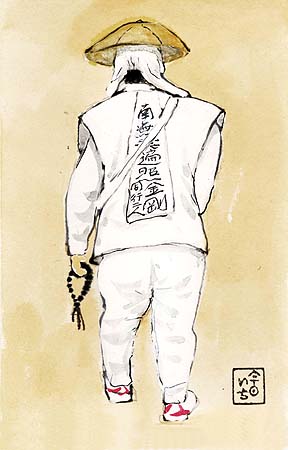
“Kogal Interview.” Tokyo Damage Report. March 19, 2009.

Kristof, Nicholas D. “Tokyo Journal; A Plain School Uniform as the Latest Aphrodisiac.” New York Times. April 2, 1997.

Kurihara, Masukazu. “25sai ni nattemo nukedasenai ‘moto enkōshojo’-tachi no kurayami.” Takarajima. February 2008.

Leheny, David. Think Global, Fear Local: Sex, Violence, and Anxiety in Contemporary Japan. Cornell University Press, 2009.

Marx, W. David. “Interview with Yasumasa Yonehara” MEKAS. January 29, 2009.

Namba, Koji. “Concerning Youth Subcultures in the Postwar Era, Vol. 5: ‘Ko-gal’ and ‘Urahara-kei,’” Kwansei Gakuin University Sociology Department #100, March 2006.

Pons, Philippe. “Schoolgirls pander to the Lolita Fantasy.” The Guardian Weekly. Dec. 8, 1996

Reitman, Valerie. “Japan’s New Growth Industry: Schoolgirl Prostitution.” Wall Street Journal. October 2, 1996.

W. David MARX
May 8, 2012

W. David Marx (Marxy) — Tokyo-based writer and musician — is the founder and chief editor of Néojaponisme.